
Description
Self-Cleaning Permanent Magnetic Separator for Belt Conveyors
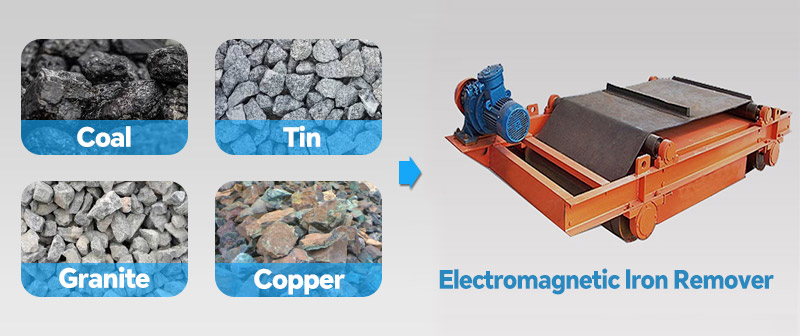
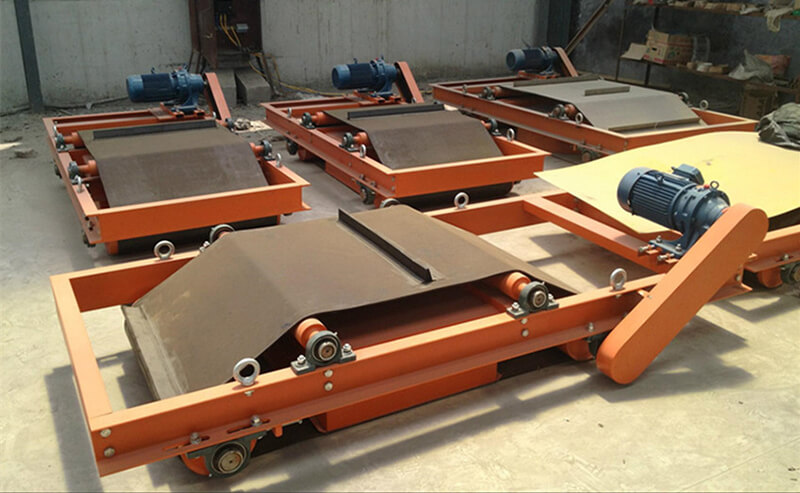
The RCYD series is a suspended permanent conveyor magnet that removes unwanted iron and steel from conveyed material. Its motor-driven discharge belt carries captured metal away from the material stream and releases it into a separate collection area.
Dasen Mining supplies this equipment for iron removal in mineral processing plants. Send us your conveyor width, belt speed and material depth to discuss a suitable model.
Listed conveyor widths: 500–2,000 mm
Listed drive power: 1.5–11 kW
Cleaning method: Automatic belt discharge
Tramp Iron Removal Before Crushing
Stray iron and steel can damage downstream crushers, mills and conveyor belts. A suspended magnet helps remove this material from the conveyed feed before it reaches the equipment being protected.
For a gold ore crushing circuit or another mineral processing line, send us a layout showing the conveyor and downstream equipment. Please mark the proposed installation position and the space available for discharged metal.
This page covers conveyor iron removal—not mineral concentration. If your enquiry concerns magnetic ore recovery, please include the ore type and separation requirements so we can review the correct equipment category.
How the Self-Cleaning Magnet Works
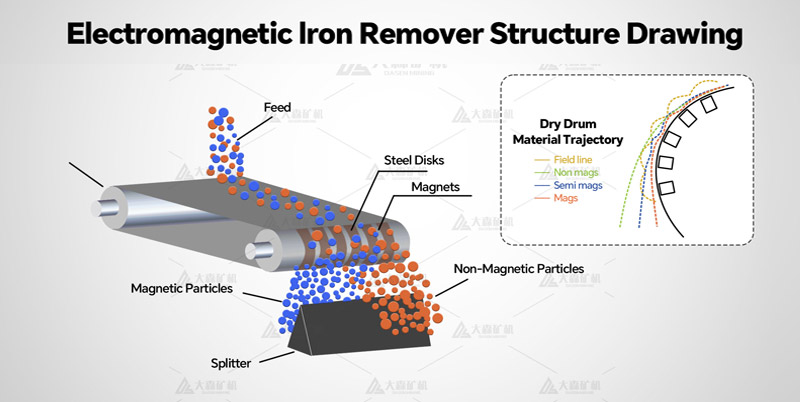
- Material travels beneath the suspended magnet on the main conveyor.
- The magnetic field attracts iron and steel from the material stream.
- The separator’s discharge belt carries the captured metal away from the feed.
- Once outside the magnetic field, the metal falls into a collection bin or chute.
The permanent magnet requires no electrical excitation. Electricity is used to drive the discharge belt.
RCYD Permanent Magnetic Separator Specifications
| Model | Conveyor belt width (mm) | Rated suspension height (mm) | Material depth ≤ (mm) | Listed magnetic flux density ≥ (mT)* | Drive power ≤ (kW) | Weight (kg) |
|---|---|---|---|---|---|---|
| RCYD(C)-5 | 500 | 150 | 80 | 60 | 1.5 | 750 |
| RCYD(C)-6 | 600 | 175 | 120 | 60 | 1.5 | 920 |
| RCYD(C)-6.5 | 650 | 200 | 150 | 70 | 2.2 | 1,200 |
| RCYD(C)-8 | 800 | 250 | 200 | 70 | 2.2 | 1,400 |
| RCYD(C)-10 | 1,000 | 300 | 250 | 70 | 3.0 | 2,120 |
| RCYD(C)-12 | 1,200 | 350 | 300 | 70 | 4.0 | 3,350 |
| RCYD(C)-14 | 1,400 | 400 | 350 | 70 | 4.0 | 4,450 |
| RCYD(C)-16 | 1,600 | 450 | 400 | 70 | 5.5 | 6,200 |
| RCYD(C)-18 | 1,800 | 500 | 450 | 72 | 7.5 | 8,100 |
| RCYD(C)-20 | 2,000 | 550 | 500 | 72 | 11 | 9,700 |
What We Need to Select a Model
Belt width is only the starting point. Conveyor speed, material depth, suspension height and the size of the unwanted metal also affect selection. Available space can influence the installation arrangement.
Please provide:
- Conveyor: belt width, speed and inclination;
- Material: ore type, maximum lump size and depth on the belt;
- Throughput: normal and peak feed rate;
- Iron contamination: typical shape, size and frequency;
- Installation: conveyor drawing or site photos, with available headroom;
- Site conditions: material temperature, dust, moisture and power supply.
If you are replacing an existing unit, include its nameplate and explain the problem you want to solve.
Confirm the Supply Scope Before Ordering
Please indicate whether your enquiry is for the separator alone or includes:
- Suspension hardware or a support structure;
- A local control panel and conveyor interlocking;
- A discharge chute or collection bin;
- A spare discharge belt and other replacement parts.
Ask for an itemized quotation showing what is included. Confirm the mounting arrangement, electrical requirements and maintenance access before manufacture.
Frequently Asked Questions
- Does a permanent conveyor magnet use electricity?
The magnet itself does not require an excitation power supply. The self-cleaning belt uses a motor, so the complete unit is not a zero-power machine. - Can I choose a model using conveyor width alone?
No. Include belt speed, material depth, installation clearance and the expected iron contamination. These details help determine whether a proposed model and mounting arrangement suit the duty.(eriez.com) - Can you guarantee a maximum iron pickup weight?
A pickup-weight requirement needs stated operating conditions. Send the dimensions, shape and weight of the target item, together with the material depth and installation details. Ask for a test-based assessment rather than relying on a general kilogram range. - What information is needed for a quotation?
Start with conveyor width, belt speed, material type and material depth. Add site photos or a conveyor drawing if available, and state whether controls, suspension hardware and spare parts are required.
We can provide you with more information about Gold Ore Plant Solution. If you have any questions, please contact: Whatsapp:+86 133 1927 7356
Email:[email protected]